

Welcome to the World of Jiu Jitsu!
Jiu-Jitsu is more than just a martial art—it’s a journey of self-discovery, discipline, and growth.
The Evolution of Jiu Jitsu: A Journey Through Time
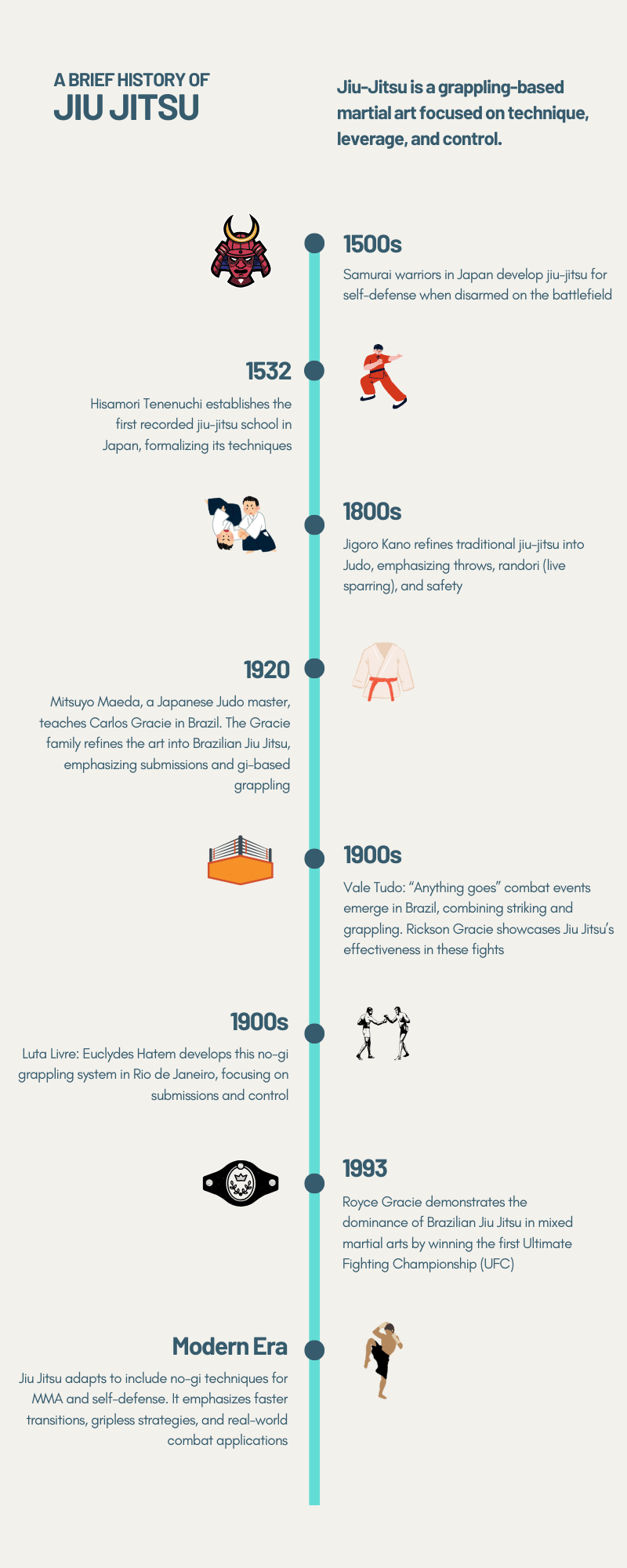
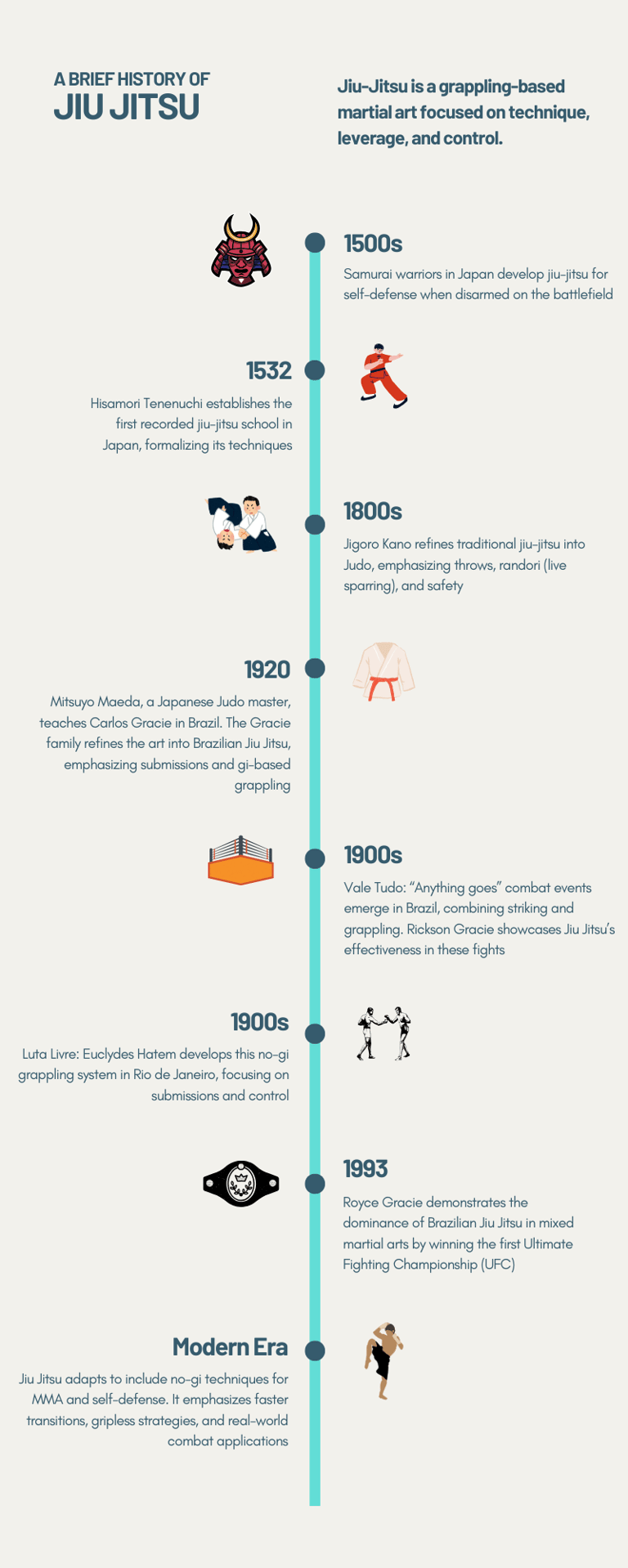
Jiu Jitsu has evolved across centuries, spanning continents and cultures. Its roots trace back to Japan, where samurai warriors developed techniques for combat, before the art was transformed in Brazil and eventually reached global prominence. Along the way, key milestones like Vale Tudo and Luta Livre have played significant roles in shaping Jiu Jitsu into what it is today—a versatile martial art practiced both with and without the gi. Below is a timeline highlighting the pivotal moments in Jiu Jitsu’s rich history.
Understanding the Two Main Types of Jiu-Jitsu:
1. Gi Jiu-Jitsu (aka BJJ)
Practitioners wear a traditional Gi (kimono), allowing grips on the fabric for techniques like chokes, sweeps, and holds. It’s slower-paced, focusing on control and grip-based submissions.
2. No-Gi Jiu-Jitsu (aka No Gi)
Practitioners wear athletic gear (rash guards, shorts/spats) without fabric grips. Techniques rely on body control, underhooks, and speed, making it faster-paced and more dynamic.
Jiu Jitsu Gear
This list reflects gear I use or recommend based on my experience and research. There’s no one-size-fits-all—choose what suits your style, budget, and needs. Buying directly from the source is often cheaper, but I’ve included Amazon links for convenience.
Gi or No-Gi Training Attire
Jiu Jitsu gear is a personal choice that depends on the athlete’s preferences. Choose an attire that represents your style and makes you feel comfortable, as it will be your training companion. Alternatively, you can keep it simple and focus solely on training—ultimately, it’s all about what works best for you.
Option 1: Buy from a Physical Store
Pros: You get your exact fit. You can feel the quality of the product.
Cons: Limited options.
Option 2: Shop Online
Pros: Wide selection. Usually cheaper.
Cons: Sizes might not be an exact fit. Quality might not be up to expectations.
Rollmore is an online store specializing in Jiu-Jitsu gear and apparel. It offers a wide range of brands, making it a great starting point for online shopping. Depending on availability, you can purchase directly from Rollmore or visit the original brand’s website. Here are some established brands in no specific order with their official websites:
Standard: Fuji, Ronin, Kingz, Tatami, Scramble, Venum
Premium: Shoyoroll, Origin, Hayabusa, Isami, Koral
Things to Consider when buying your first Gi:
Weave (Fabric Type) and Weight (GSM – Grams per Square Meter)
Single Weave: Lightweight, thinner, and ideal for beginners or hot climates
Double Weave: Thicker, heavier, and highly durable
Gold Weave: Balanced weight and durability, a blend of single and double weave
Pearl Weave: Lightweight yet durable, a popular modern choice
Ripstop Weave: Ultra-lightweight and tear-resistant, often used for pants or hot-weather Gis
Size
Jacket sleeve should reach no more than 2 cm above the wrist when the arm is fully extended and parallel to the ground, and pants should not sit higher than 2 cm above the ankle bone.
Competition Requirements (if you wish to compete)
IBJJF Rules:Jacket weight must be between 380 – 650 GSM
Only White, Black, and Royal Blue colors are allowed
Gi Maintenance
Wash your Gi after every session
Follow wash instructions and air dry to prevent shrinking
Gym Bag
Choose a gym bag that’s spacious enough to carry all your gear comfortably. I
personally use a discontinued model from Tatami, which I love because it has
multiple compartments. This makes it super convenient to organize and quickly
locate your items during training.
Water Bottle (Main)
I use a Yeti 0.5-gallon (1.89-liter) jug. It’s sturdy, keeps track of how much water
you’re drinking, and has a sleek design. However, it can be large and heavy, so it
may not be ideal for everyone.
Water Bottle (Small) – for Electrolytes
A bottle between 500 ml and 1 liter is ideal for mixing and drinking electrolytes from
sachets or drops. It’s compact, convenient, and easy to use during training or on
the go.
Electrolytes
LMNT offers a high sodium content of 1,000 mg, along with 200 mg of potassium
and 60 mg of magnesium, making it effective for hydration and replenishment. It
contains no sugar and comes in a range of flavors to suit different preferences.
Mouth Guard
I recommend getting a custom-made mouthguard from a dentist for maximum
comfort during training. It ensures a snug fit, allows you to speak easily, and
provides optimal protection for your teeth.
Slippers
Choose a pair of comfortable slippers that are easy to slip on and off when entering
or exiting the mat. Opt for ones that don’t absorb sweat to maintain cleanliness and
convenience.
Towel (Small) – to use during training
A small microfiber towel is great for keeping sweat under control during training. Its
lightweight, quick-drying material makes it easy to carry and perfect for wiping
away sweat, ensuring you stay dry and don’t transfer excess sweat to your training
partners.
Towel (Big) – to use in the shower
A large microfiber towel is essential for after training. It’s perfect for drying off
quickly after a shower, and its quick-drying material makes it convenient to pack
back into your gym bag. Showering immediately after training is crucial for
removing sweat and bacteria, ensuring your skin stays clean and healthy.
Laundry Bag
The Stinky XL Laundry Bag is perfect for storing sweaty clothes after training. It’s
designed to prevent sweat and odors from transferring to the other contents of
your gym bag. The bag is spacious enough to hold all your post-training gear, and
as an added convenience, it can be thrown directly into the washing machine
without needing to remove the clothes inside.
Changing Clothes (after training)
A change of clothes is essential so you can shower after training and get into fresh,
clean clothes.
Shower Gel
Defense Soap is a natural and highly effective product designed to help combat
infections that can sometimes occur from training on the mats. With ingredients like
tea tree oil and eucalyptus, it provides a natural defense against bacteria, fungus,
and viruses. Regular use can help protect your skin and maintain hygiene, which is
especially important in a sport like Jiu-Jitsu where close contact is unavoidable. It’s
a must-have for keeping your skin healthy and infection-free.
Groin Cup (optional)
A groin cup isn’t very common or necessary for Jiu-Jitsu, but some people prefer
the extra protection. In a martial art that involves a lot of movement and awkward
positions, a cup can sometimes feel uncomfortable or restrictive. However, for
those who don’t mind the fit, it can offer peace of mind during training.
Finger Tape – for Gi (optional)
Finger tape is essential for Gi training as it helps protect your fingers from strain
and injuries caused by gripping the thick fabric of the Gi. It supports the joints and
ligaments, preventing issues like sprains, dislocations, and overuse injuries, while
also reducing discomfort during intense training sessions.
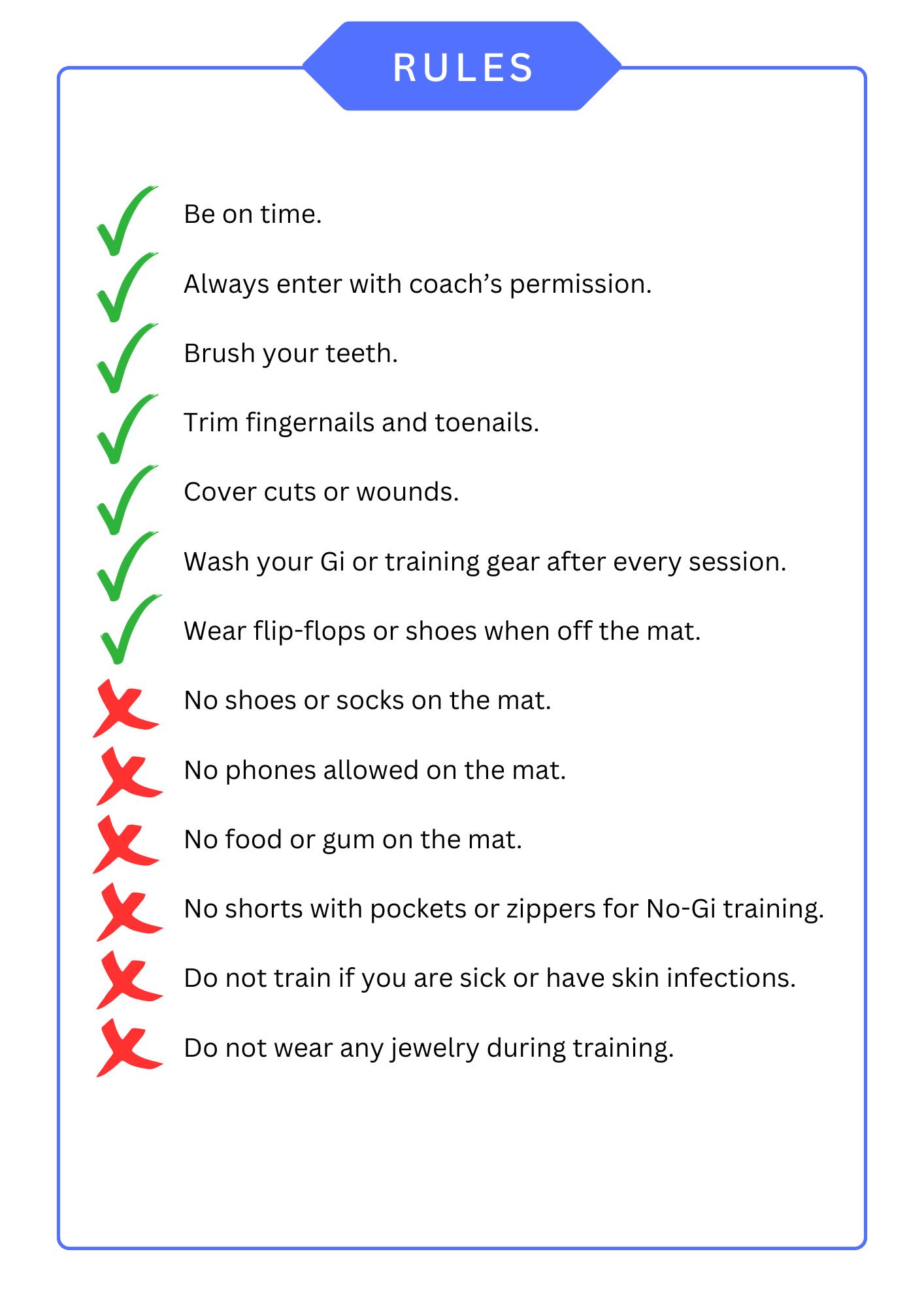
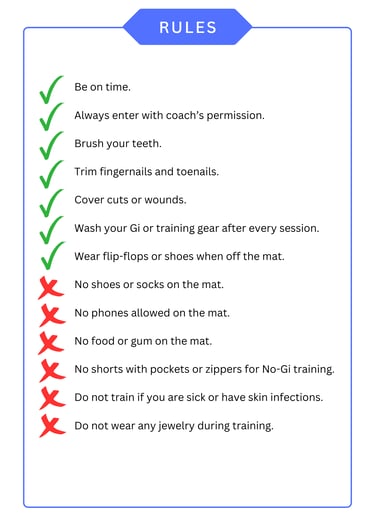
Mat Rules
Belt Grading System
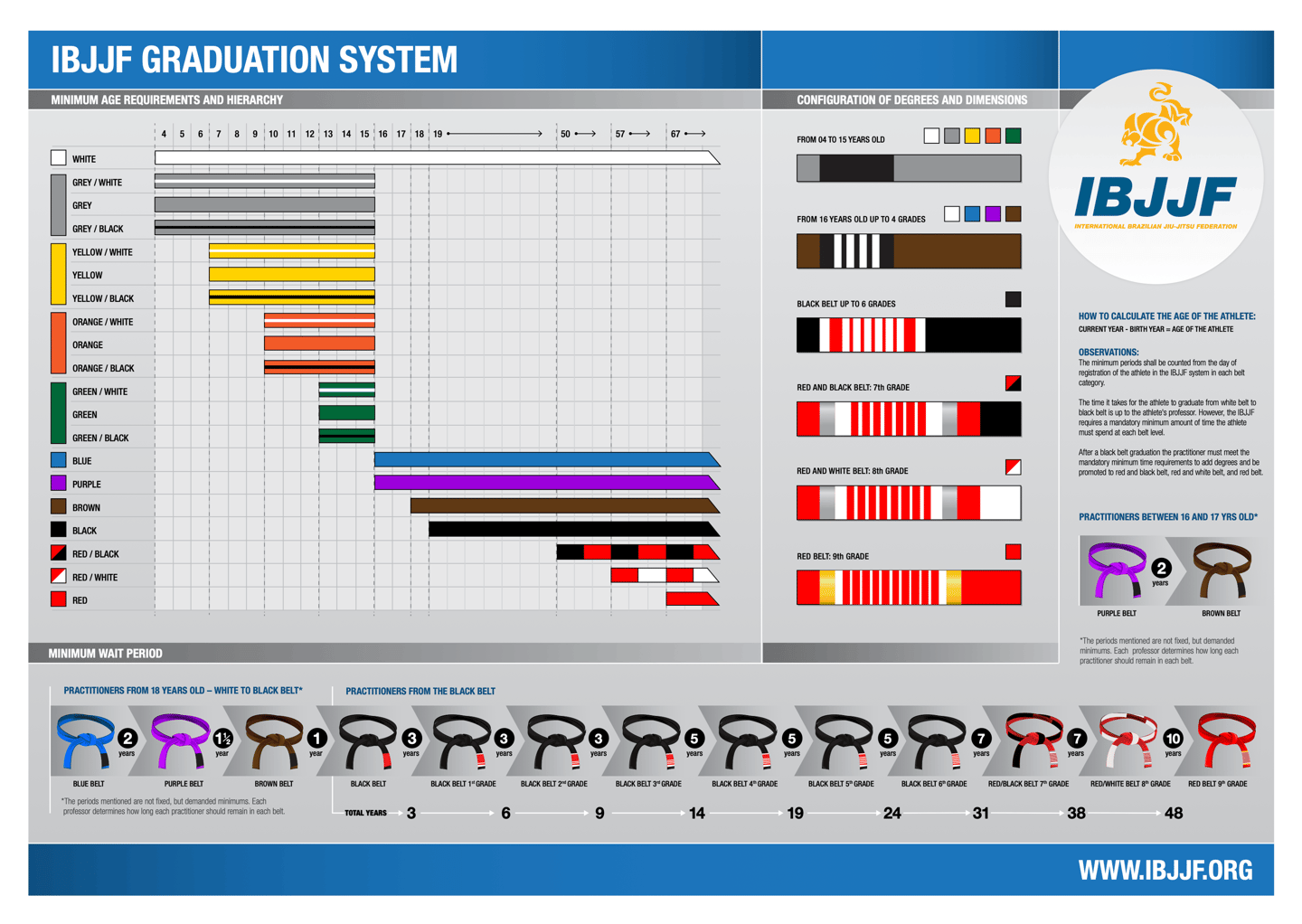
Belts in Jiu Jitsu serve as a general indicator of progress, providing a way to evaluate a practitioner’s skills and experience within the context of the belt system. The belt structure outlined below is based on the standards set by the International Brazilian Jiu Jitsu Federation (IBJJF), widely regarded as the leading authority in Brazilian Jiu Jitsu. While the belt colors and progression system are commonly followed across most academies, the specific timeline and criteria for promotion vary depending on each academy’s grading policies and evaluation methods.
Adults: White -> Blue -> Purple -> Brown -> Black
Under 16: White -> Grey -> Yellow -> Orange -> Green
A brief overview of the expected proficiency at each belt rank:
White Belt – Survival, fundamental positions, and basic escapes
Blue Belt – Solid defense, guard retention, and basic submissions
Purple Belt – Chaining attacks, fluid movement, and problem-solving
Brown Belt – Mastering transitions, pressure, and positional dominance
Black Belt – Precision, adaptability, and deep technical knowledge
Visual Chart:
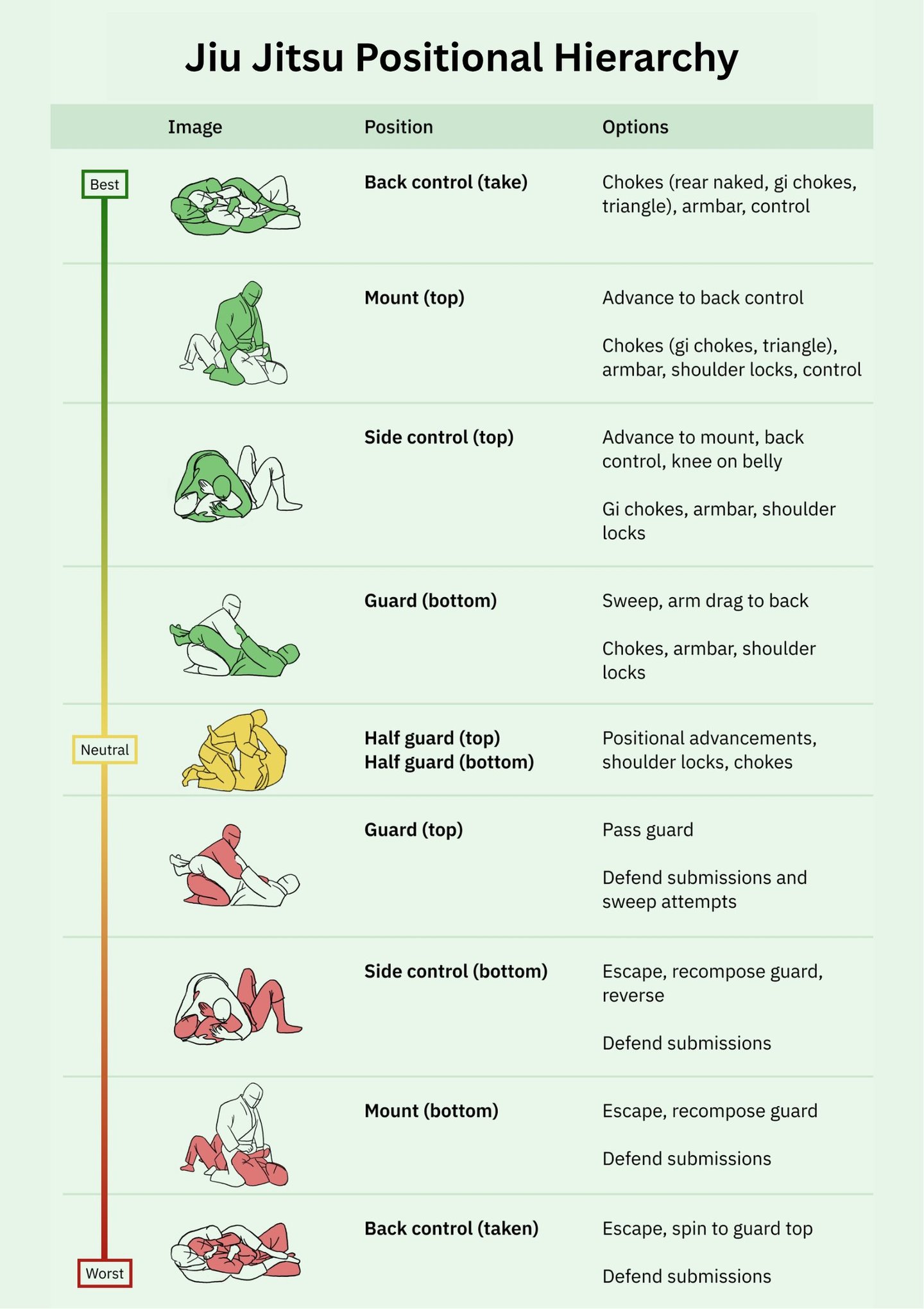
Mastering the Positional Hierarchy in Jiu Jitsu
Understanding the positional hierarchy is key to success in Jiu Jitsu. This chart illustrates the main positions ranked from most dominant to least favorable, providing a clear roadmap for what to strive for during training. Mastering transitions between these positions is fundamental to improving control and effectiveness on the mat.
The Basics of Throwing Techniques
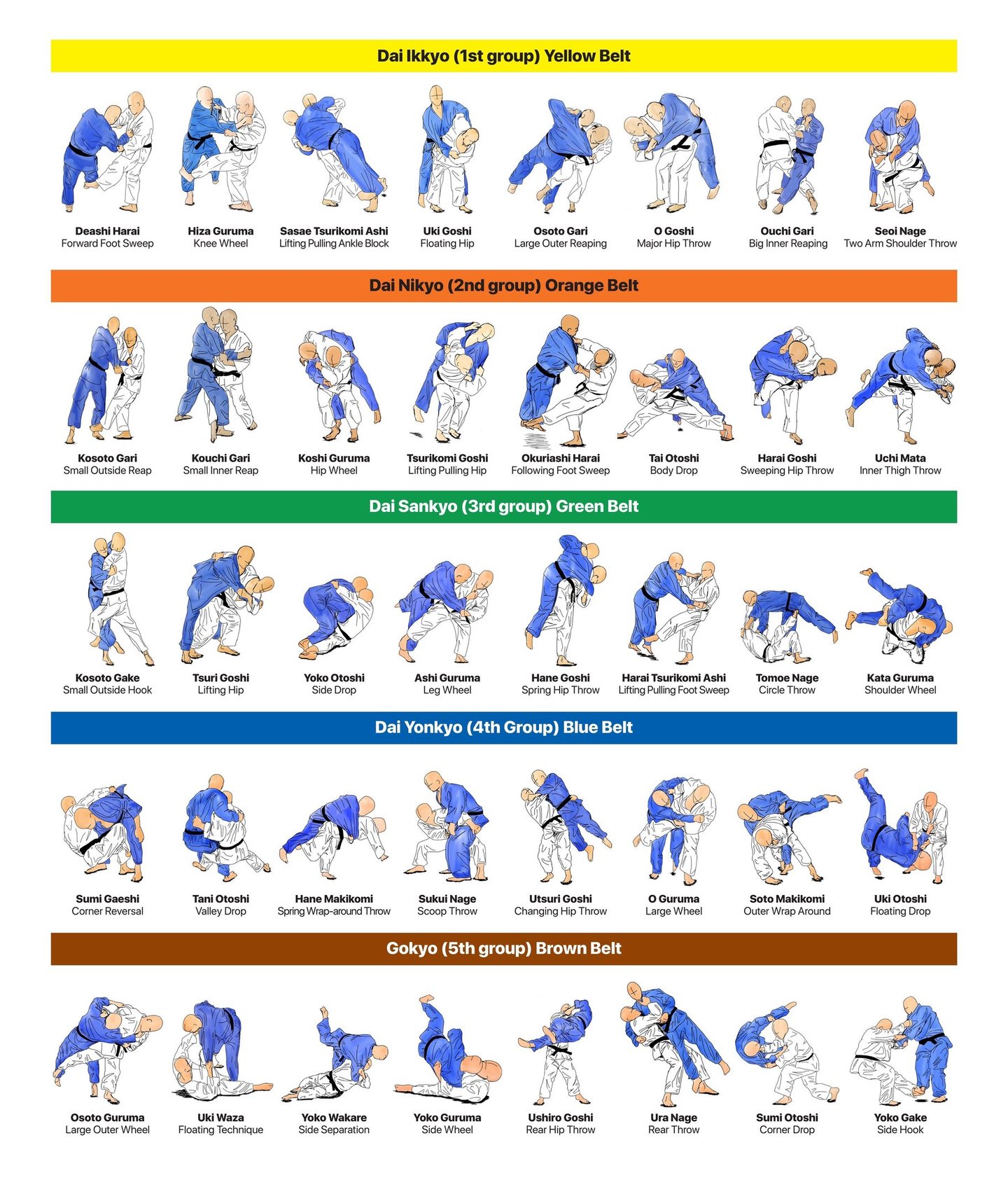
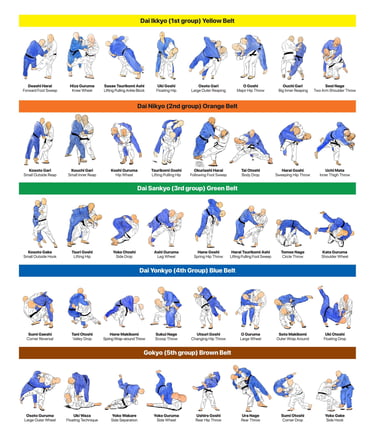
Understand the foundational throwing techniques established in 1895 at the Kodokan in Tokyo, Japan. These techniques, rooted in Judo, have become crucial tools for mastering leverage, balance, and control in the modern Jiu Jitsu game.
Grips, Submissions, and Positions: The Essentials
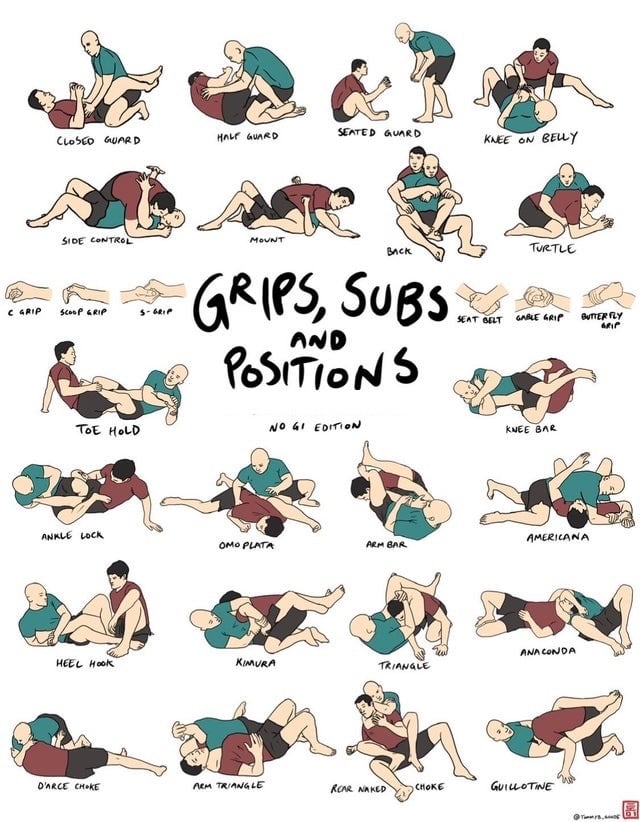
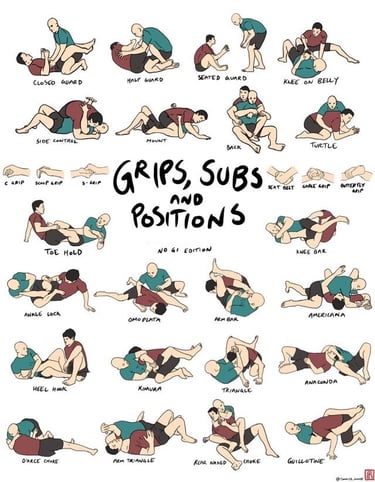
This illustration brings together the core elements of Jiu Jitsu—grips, submissions, and positions—into one cohesive visual for better understanding and application.
The Key to Longevity in Jiu Jitsu
Training for Jiu Jitsu should prioritize building a strong, resilient body while maintaining flexibility and preventing injuries—key to ensuring longevity in the sport.
Strength training – Lifting heavy weights conditions the body for the push-and-pull movements central to Jiu-Jitsu
Mobility exercises – Dynamic and static stretches will help prepare joints to handle stress effectively
Cardiovascular conditioning – Enhances endurance and breathing control, allowing you to perform at your best for longer periods during training and sparring
Recovery ensures training efforts translate into growth and improvement. Without it, even the best routines can lead to fatigue or injury. Beyond the physical benefits, proper recovery also enhances mental clarity, focus, and overall well-being, keeping you sharp both on and off the mats.
Rest – Giving your body a break from intense training helps prevent overuse injuries and allows sore muscles to recover. Rest days don’t mean doing nothing—you can stay active with light movement, stretching, or mobility work without putting extra strain on your body
Sleep – The most critical aspect of recovery. Deep, quality sleep is when your body repairs muscles, restores energy, and balances hormones
Cold Water Therapy – Ice baths and cold showers help reduce inflammation, relieve soreness, and improve circulation
Hot Water Therapy – Saunas and steam rooms promote relaxation, increase blood flow, and support muscle recovery by flushing out toxins
Massages – Help release muscle tension, improve blood flow, and enhance flexibility, reducing injury risk and promoting faster recovery
Top athletes have been using these methods for years to perform at the highest levels. Incorporating these recovery methods into your routine, along with proper training and conditioning, will keep your body prepared to handle the demands of Jiu Jitsu for years to come.
Choosing the Right Jiu Jitsu Academy
When selecting a Jiu-Jitsu academy, consider the following factors to find the best fit for your goals and lifestyle. Once you’ve weighed these aspects, the next step is simple—book a trial class (many gyms offer one for free). This will allow you to experience the facility, meet the coach and training partners, and get a feel for the overall environment.
Location – Is it convenient for you to attend regularly and be consistent?
Class Schedule – Do the class times fit your availability?
Academy Type – Is it a dedicated Jiu-Jitsu academy, part of a larger gym with multiple disciplines, or does it also have a general training area for strength and conditioning?
Gi vs. No-Gi Availability – Do they offer both styles, or are they specialized in one?
Membership Options – Does it fit your budget?
Cleanliness – Are the mats clean and well-maintained? Do they follow proper hygiene protocols?
Frequently Asked Questions:
What is Jiu Jitsu?
Jiu-Jitsu (aka BJJ – Brazilian Jiu Jitsu) is a martial art that focuses on using technique and leverage to overcome opponents, making it accessible to people of all sizes. It’s often called “the gentle art” because it allows you to control and submit an opponent without relying on brute strength. Perfect for anyone looking to build confidence, improve fitness, and learn practical self-defense.
Is It Too Late to Start Jiu Jitsu?
Not at all! Jiu-Jitsu is for everyone, regardless of age or fitness level. Many people start in their 30s, 40s, or even later and find it to be a life-changing journey. Whether you’re looking to improve fitness, learn self-defense, or challenge yourself mentally, it’s never too late to step onto the mats.
Do I Need Experience or to Be Fit to Start Jiu-Jitsu?
No experience or fitness level is required to begin Jiu-Jitsu! Classes are designed for beginners, and you’ll build strength, flexibility, and endurance as you train. Just show up with a willingness to learn, and everything else will fall into place.
Should I Start Training Gi or No Gi?
Both Gi and No Gi offer unique benefits, so it depends on your goals. Training in the Gi emphasizes technique, grips, and control, making it ideal for developing a solid foundation. No Gi is faster-paced, focusing on body movement and submissions, often preferred for MMA or self-defense. If you’re unsure, try both and see what you enjoy more—they complement each other!
Is Jiu-Jitsu Safe?
Jiu-Jitsu is one of the safest martial arts when practiced responsibly. It emphasizes control and technique over brute force, and training partners are taught to prioritize safety. With proper guidance and mutual respect, injuries are rare, making it a great choice for all ages and fitness levels.
What is a Typical Jiu-Jitsu Class Like?
A standard Jiu-Jitsu class lasts about 90 minutes and is divided into four key parts:
• 15 mins: Warm-Up – Light exercises to improve mobility, flexibility, and conditioning.
• 30 mins: Technique – Learning and drilling specific moves, such as submissions, escapes, or transitions.
• 15 mins: Technical Roll – Controlled practice with a partner to apply techniques in a low-intensity setting.
• 30 mins: Free Roll – Sparring sessions to test your skills in a dynamic, live scenario.
Each part ensures you build skills progressively while improving fitness and mental focus.
What Are the Benefits of Training Jiu-Jitsu?
Jiu-Jitsu offers countless benefits that extend beyond the mats. Among the most impactful are these four key areas:
Physical
• Builds strength, flexibility, and endurance.
• Boosts cardiovascular health and promotes weight loss.
• Provides practical self-defense skills.
Mental
• Reduces stress and enhances mental clarity.
• Develops problem-solving skills and emotional resilience.
• Builds confidence while fostering humility and discipline.
Social
• Fosters camaraderie and teamwork in a supportive community.
• Builds lasting friendships and mutual respect.
Lifestyle
• Promotes a healthy, active lifestyle and consistent routine.
• Encourages mindfulness and lifelong learning.
If you have any questions about starting your Jiu-Jitsu journey or suggestions for improving the information provided, feel free to reach out to me.
